ReWalk
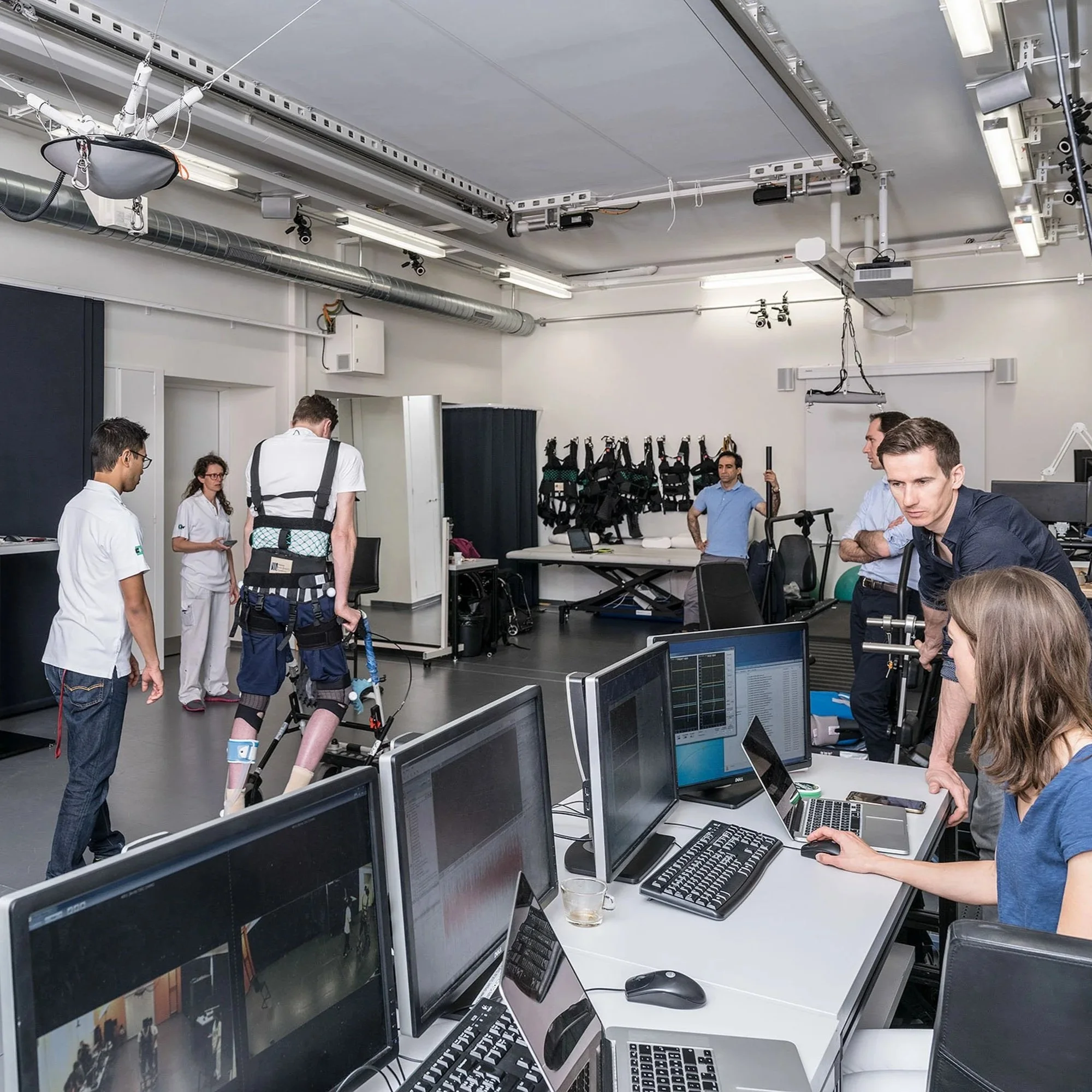
ReWalk is a groundbreaking neurorehabilitation research initiative at EPFL and CHUV, aimed at restoring locomotion after spinal cord injury. The project combines advanced neurotechnologies with rigorous scientific communication to bridge research, clinical practice, and public understanding.
Commissioning Partner
EPFL & CHUV
Sector
Clinical Research, Neurotechnologie
Discipline
Data Collection, Analysis & Visualization
Motion Design
Illustration
Photography
UX/UI Design
Press Kit
Completion Date
2018
Acknowledgment
Gregoire Courtine
Camille Mignardot
Emmanuel Pignat
Roman Heimgartner
-
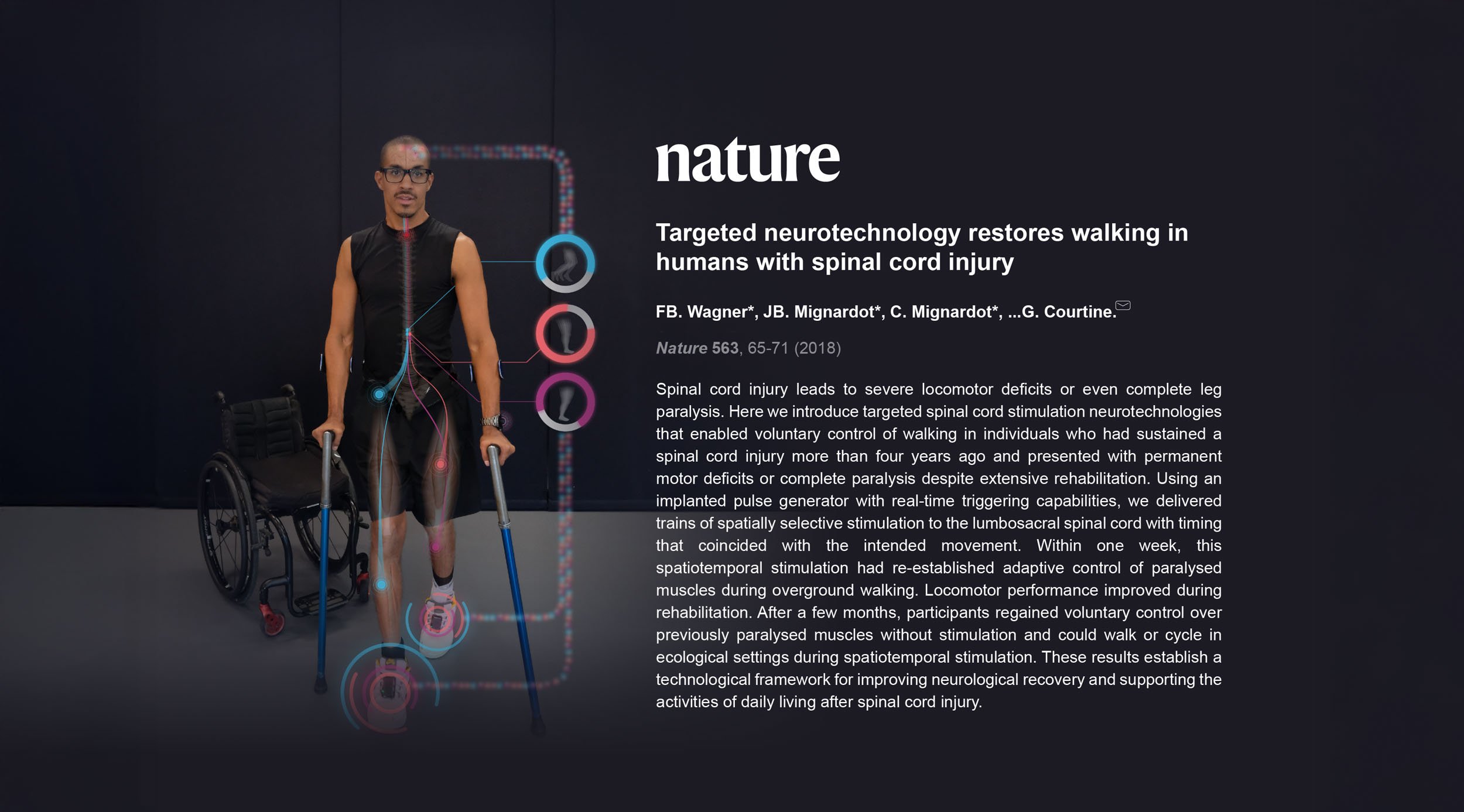
NeuroRestore, led by Prof. Dr. G. Courtine (EPFL) and Prof. Dr. J. Bloch (CHUV), are global leaders in neuroscience and clinical innovation. Their joint research program pioneers spinal cord stimulation and adaptive rehabilitation technologies to restore movement, advancing translational medicine from laboratory breakthroughs to patient care.
-
The program generated extremely complex experimental data and novel therapeutic concepts that needed to be communicated clearly to diverse audiences—scientists, clinicians, regulators, funders, media, and patients—without compromising scientific rigor or credibility.
-
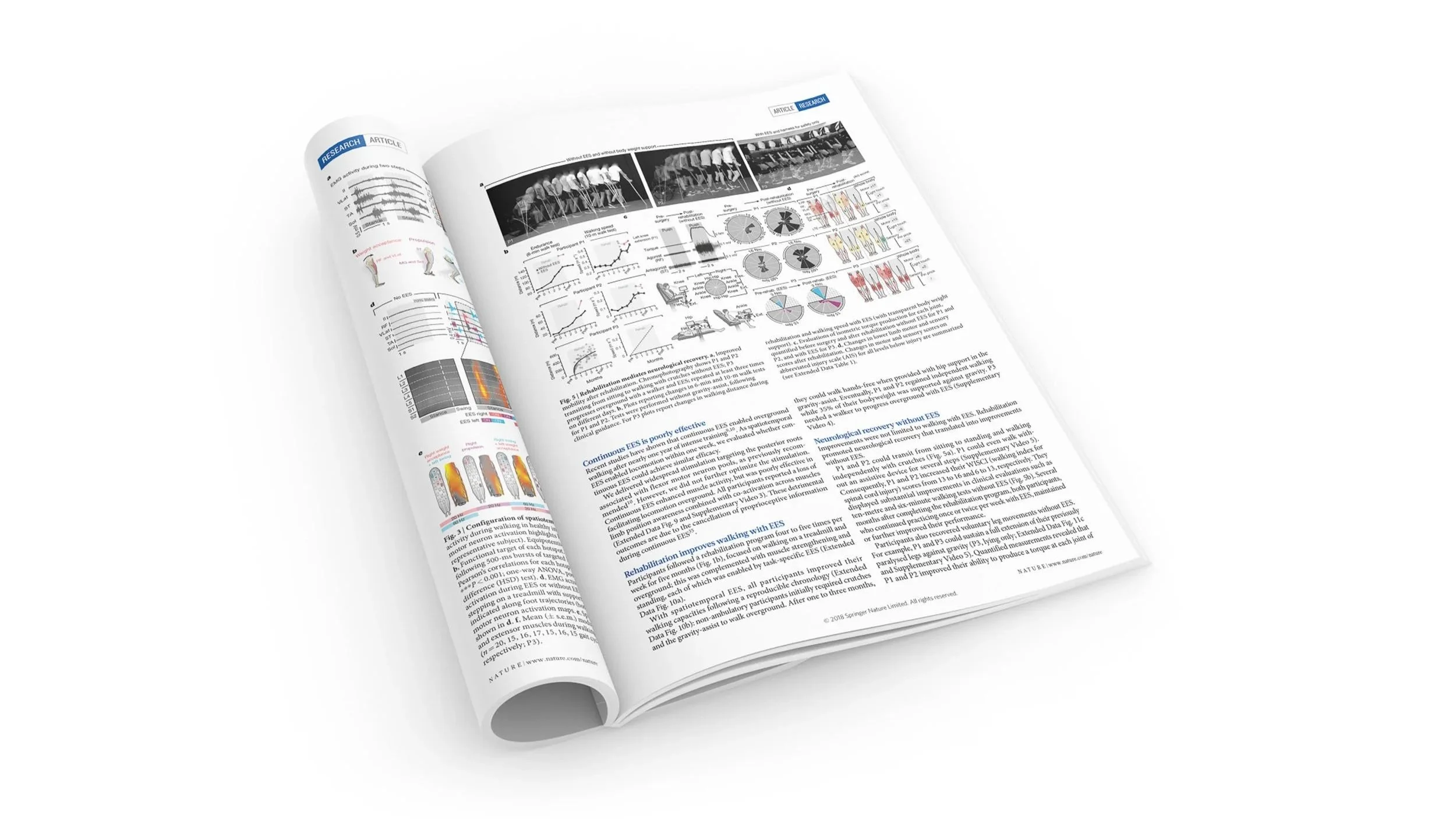
Drawing on scientific training and design expertise, I established a visual system capable of translating multimodal research data into clear, consistent figures, animations, and narratives—adapting depth, tone, and format to the expectations of all audiences.
-
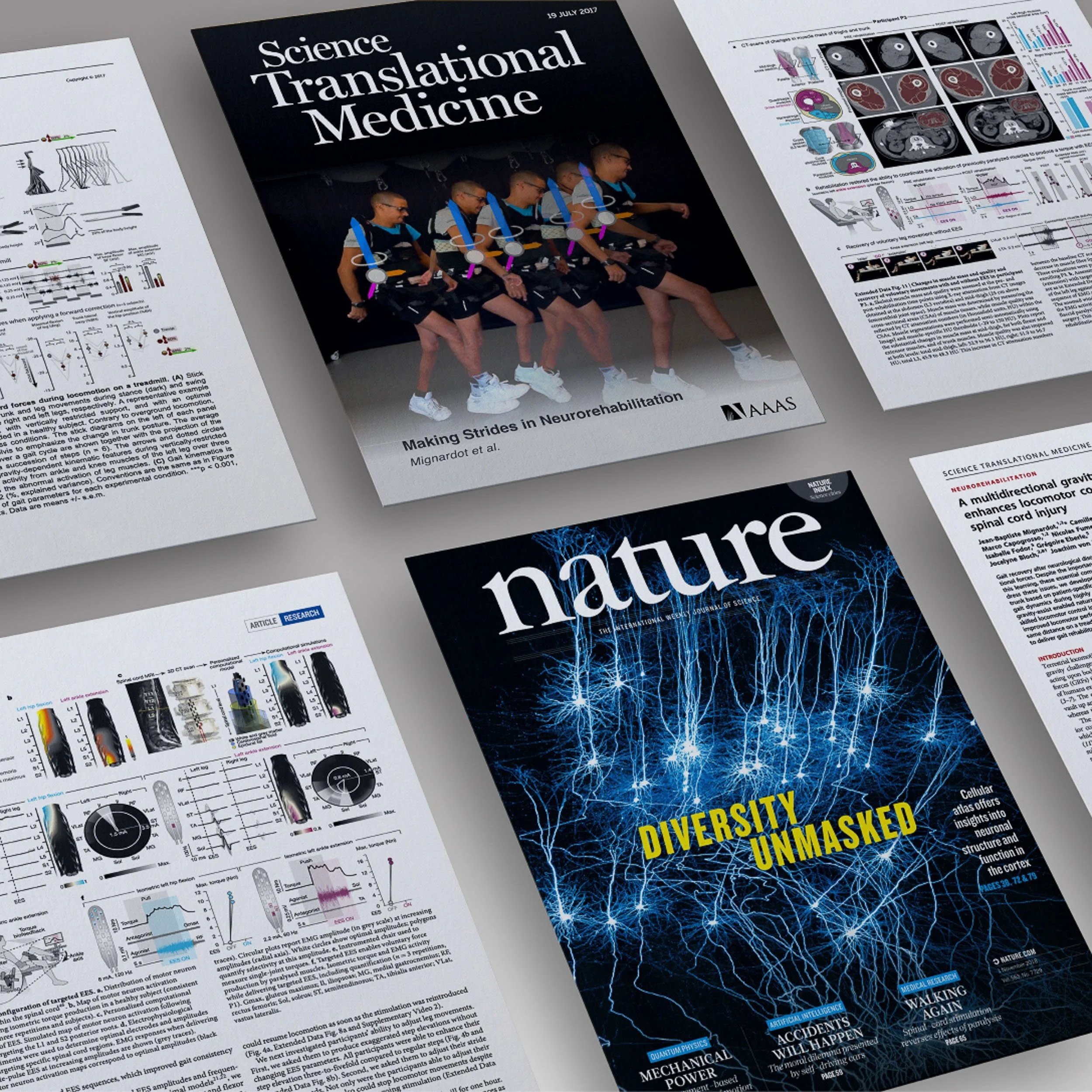
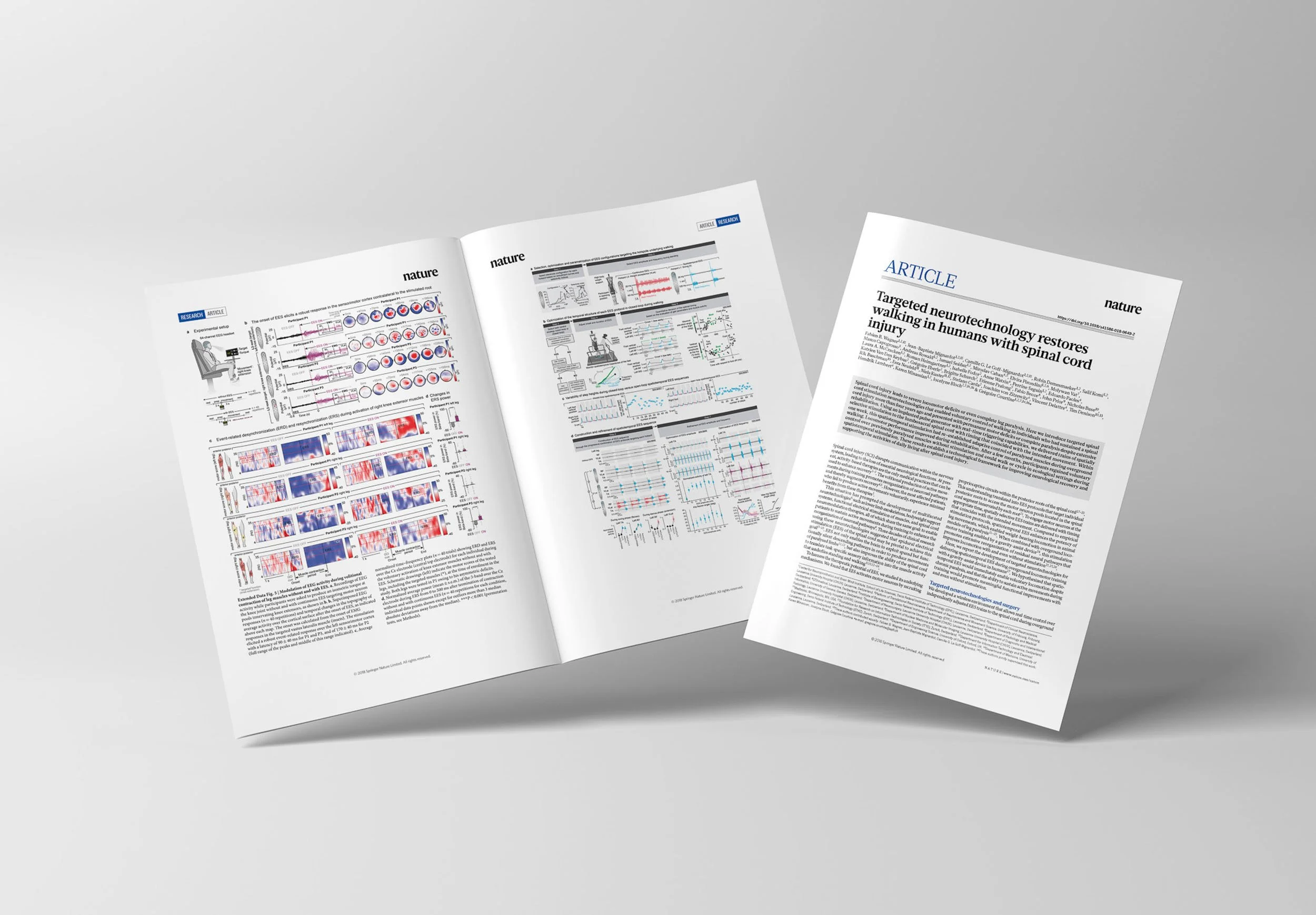
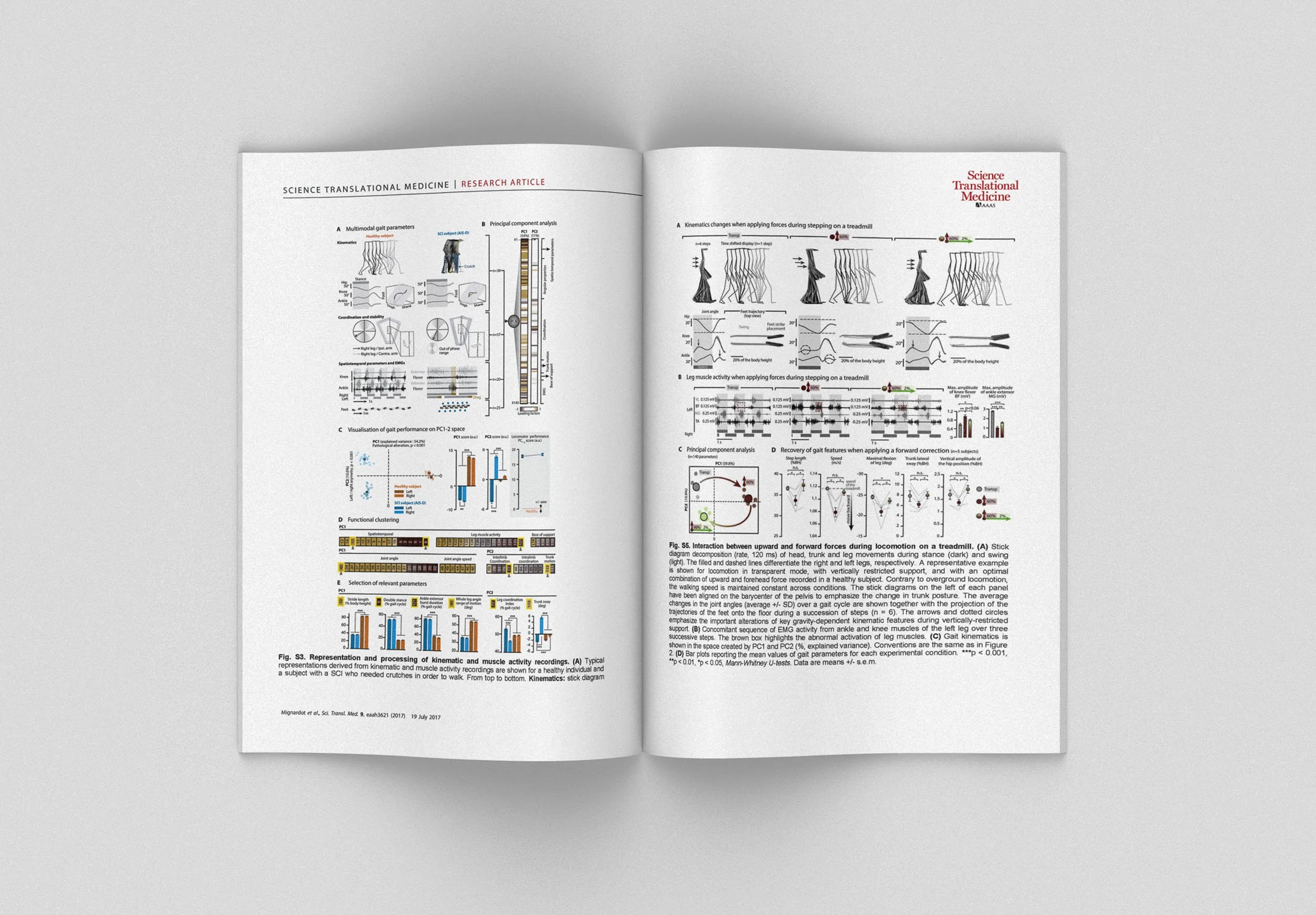
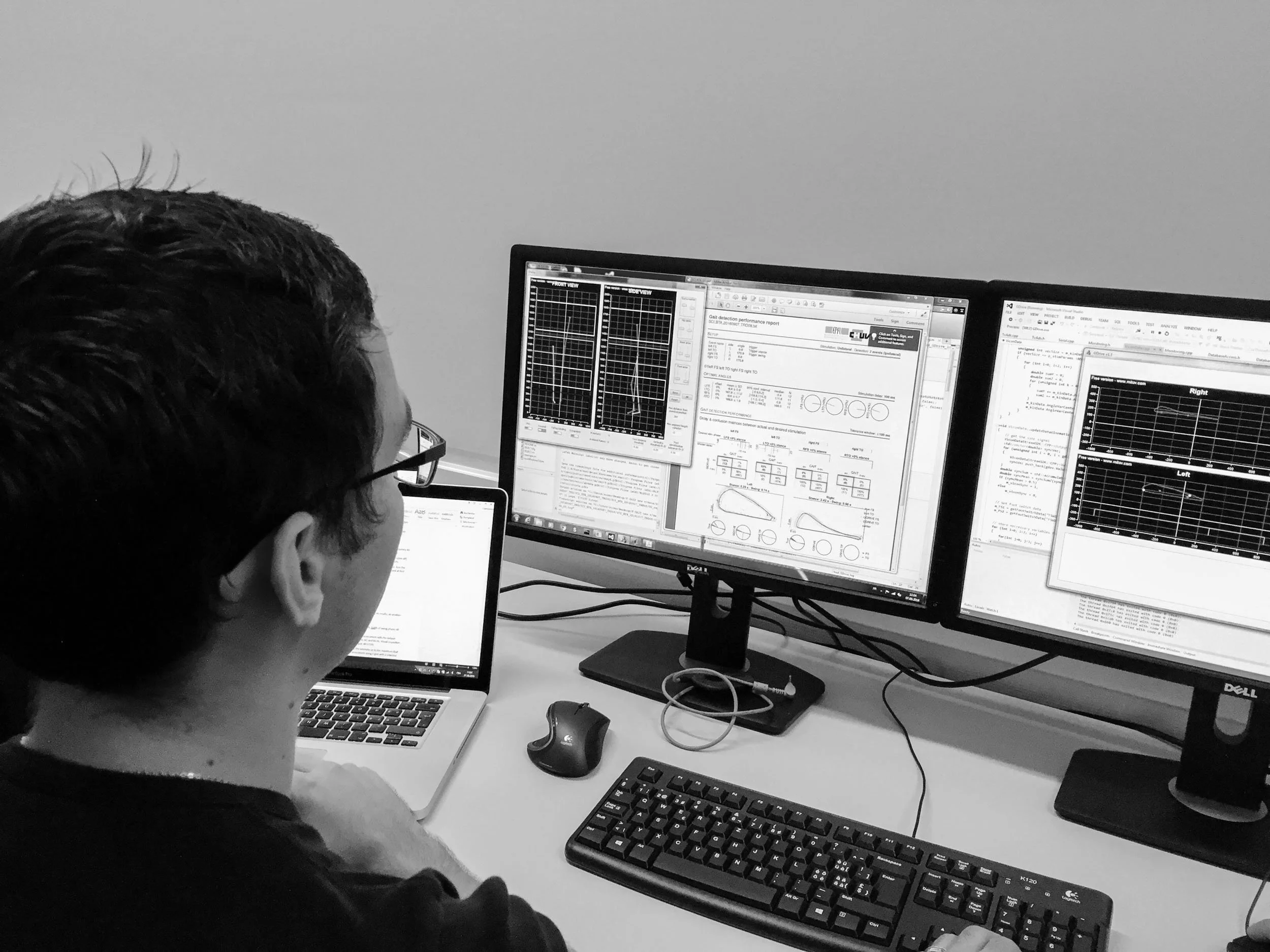
I led the creation of scientific figures, data-driven animations, and explanatory visuals for top-tier journals, institutional reports, media outlets, and educational materials. I also designed UI foundations for motion analysis and patient performance reporting within clinical research workflows.
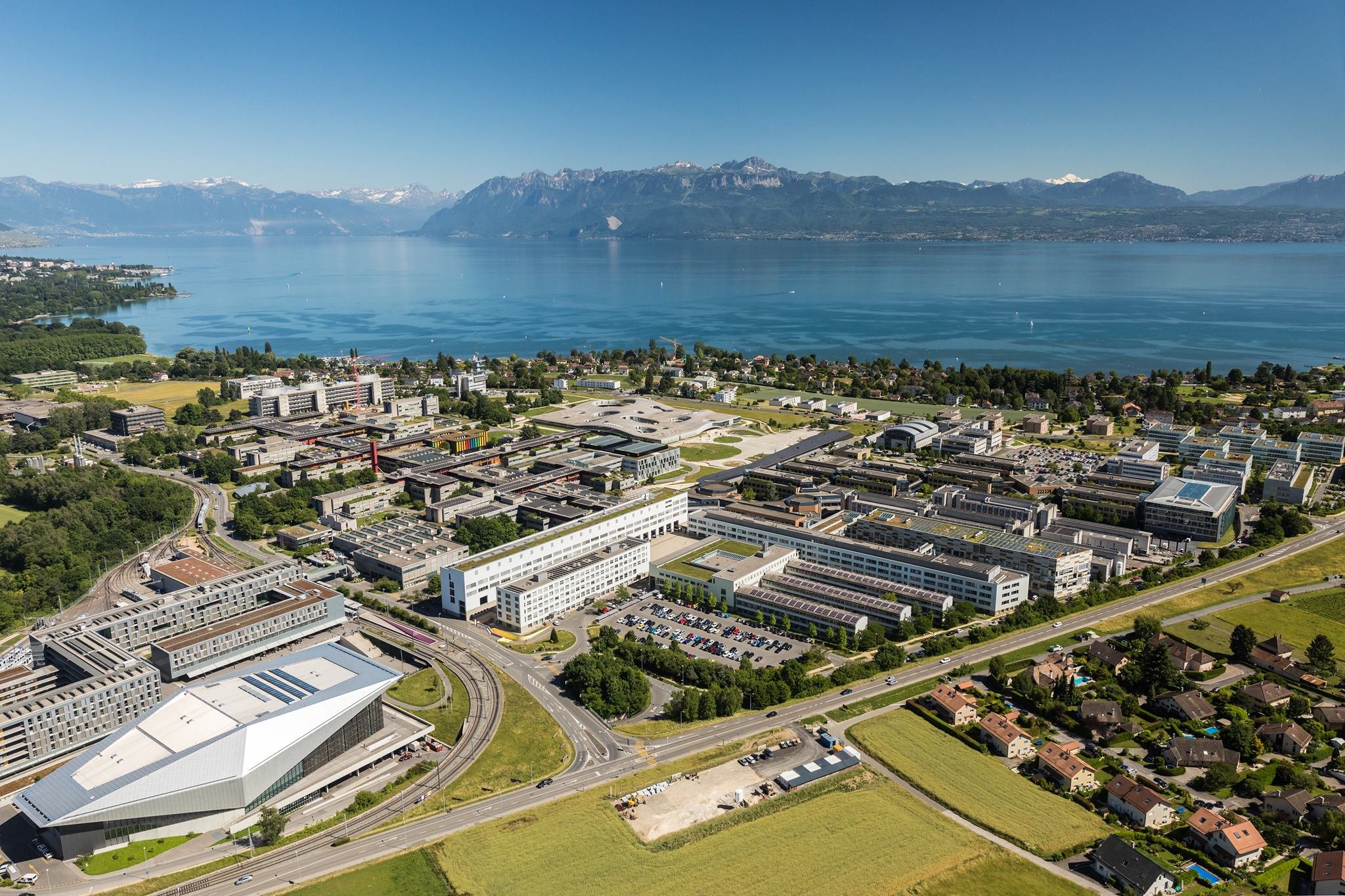
EPFL campus

Impact
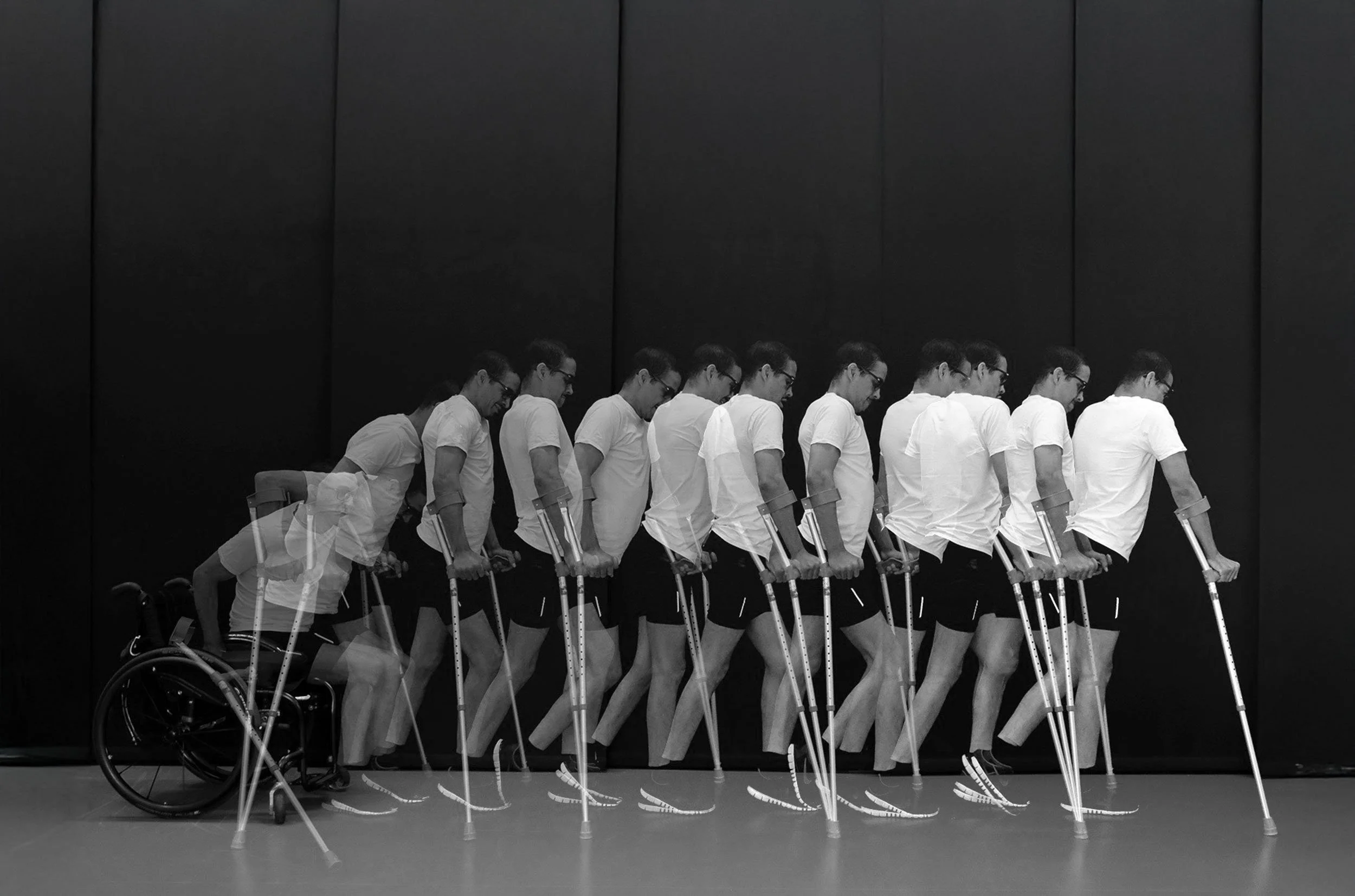
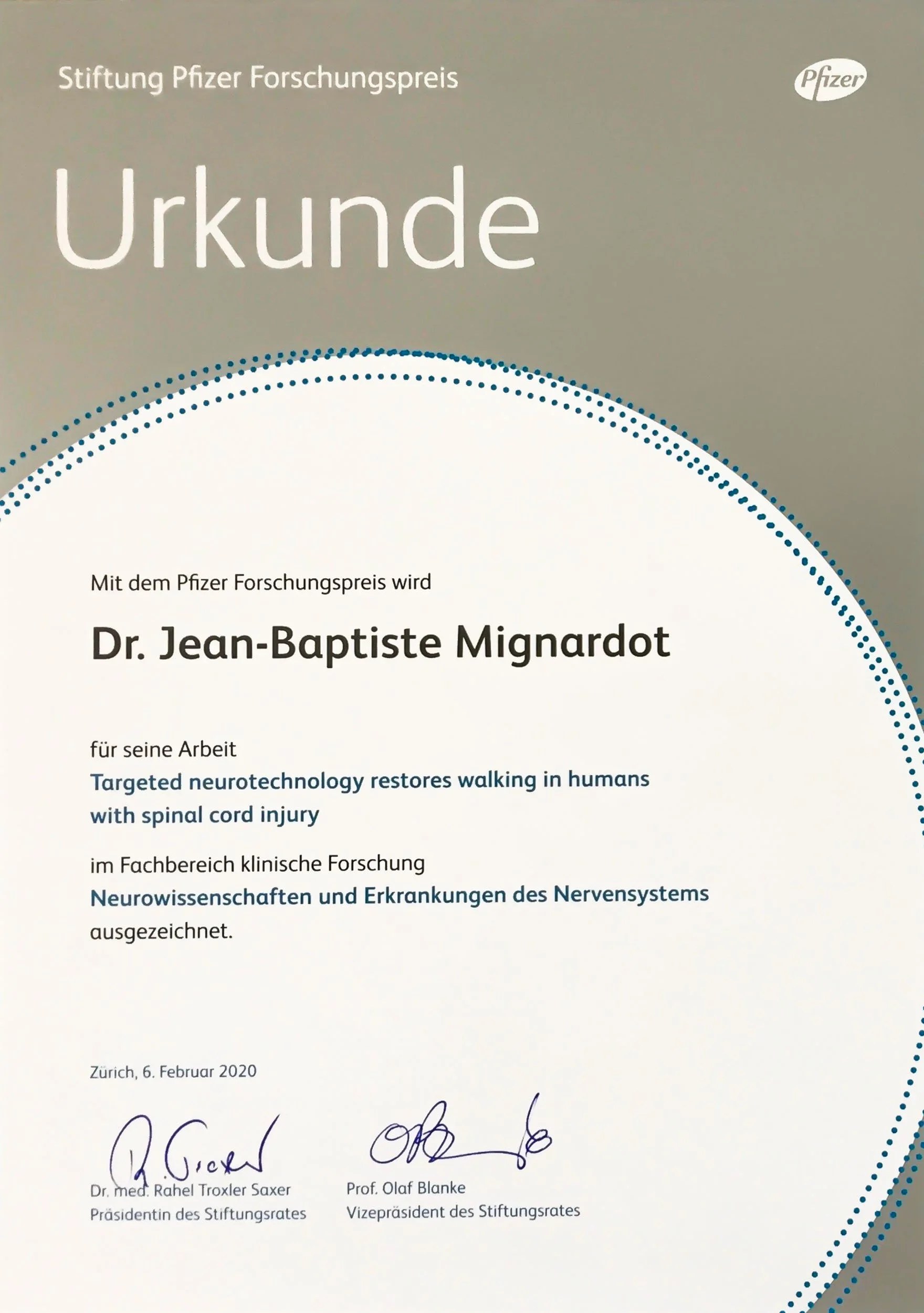
ReWalk’s visual framework strengthened the project’s scientific credibility and public visibility. High-quality creatives supported publications in leading peer-reviewed journals and enabled clear dialogue with ethics committees, partners, and funding bodies.
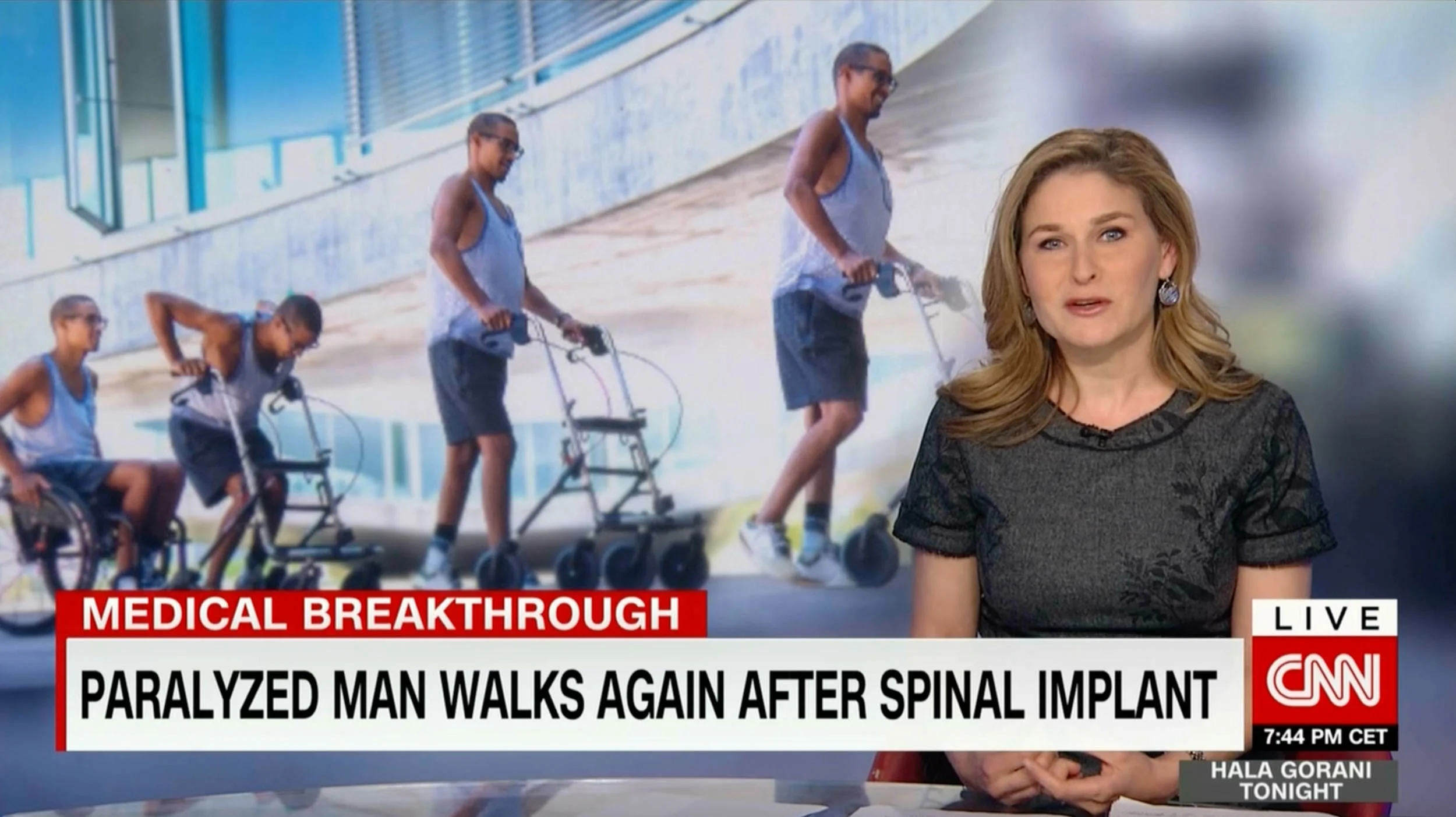
Media-ready visuals facilitated broad international coverage, while educational assets improved understanding for patients. Comprehensive gait analysis report dashboards supported, performance monitoring, and collaboration across teams—contributing to the program’s continuity, and progression toward pre-industrialization.